





Our Community
Hatching the first lines of resilience
The Fiji Pearl Oyster project begins in the coastal villages of Vanua Levu, where iTaukei communities are taking their first steps in cultivating oysters within their traditional qoliqoli (customary iTaukei fishing rights). These early farms mark the start of something deeply meaningful, a shared journey to link livelihoods with the care of the ocean. Guided by partnerships between local communities, government, and conservation groups, this project is quietly laying the foundations of a model for sustainable aquaculture that can one day flourish across Fiji and beyond.
Early community involvement
Local villages are the first partners in this story. As traditional fishing right owners, iTaukei communities hold custodianship over their marine areas and provide the knowledge, labour, and permissions that make oyster farming possible. Their involvement ensures that ownership stays within the community and that future returns will flow directly to the people who cultivate the oysters. With guidance from Fiji’s Ministry of Fisheries and support from J. Hunter Marine, these partnerships are setting the stage for locally managed farms that will belong to those who nurture them.
Women at the core
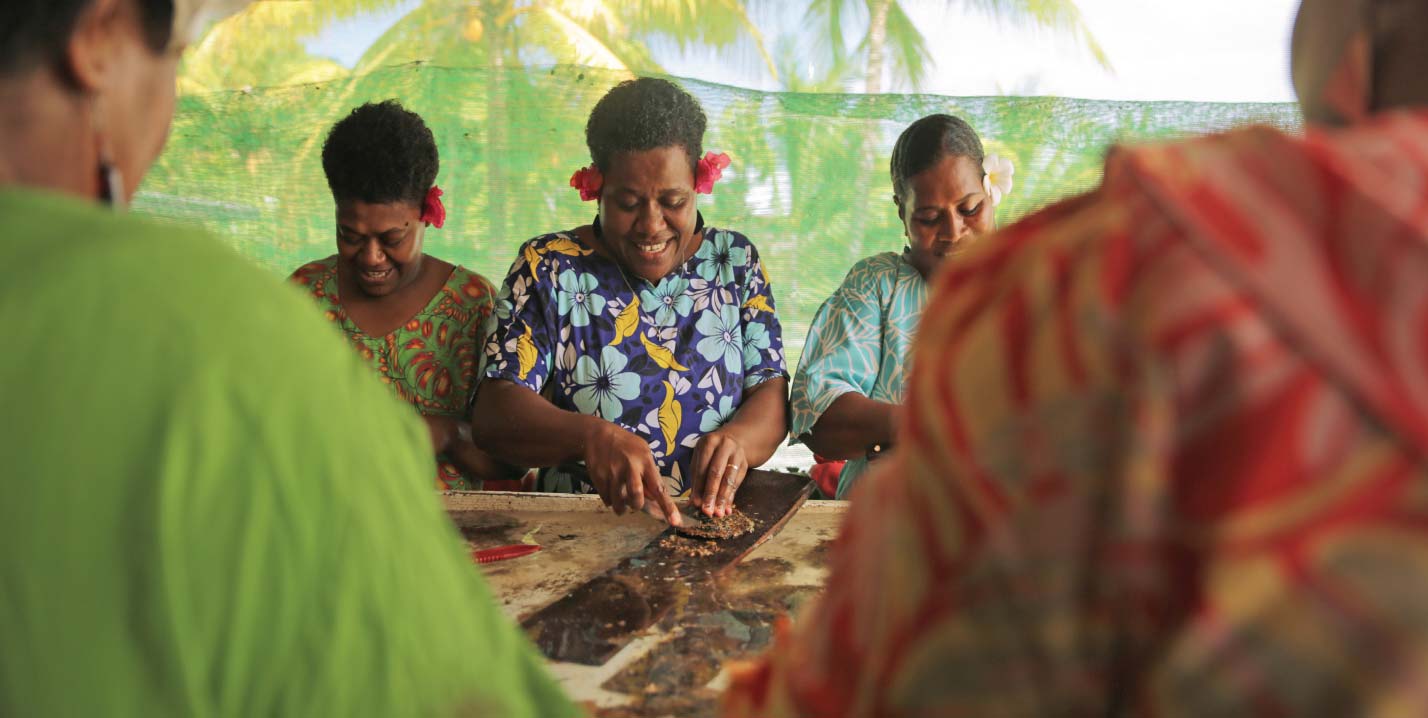
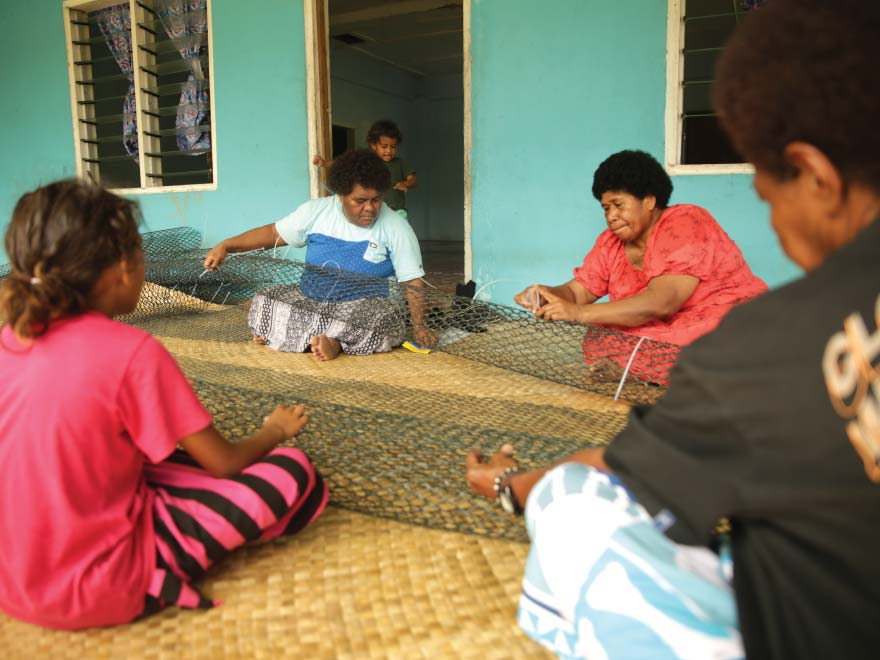
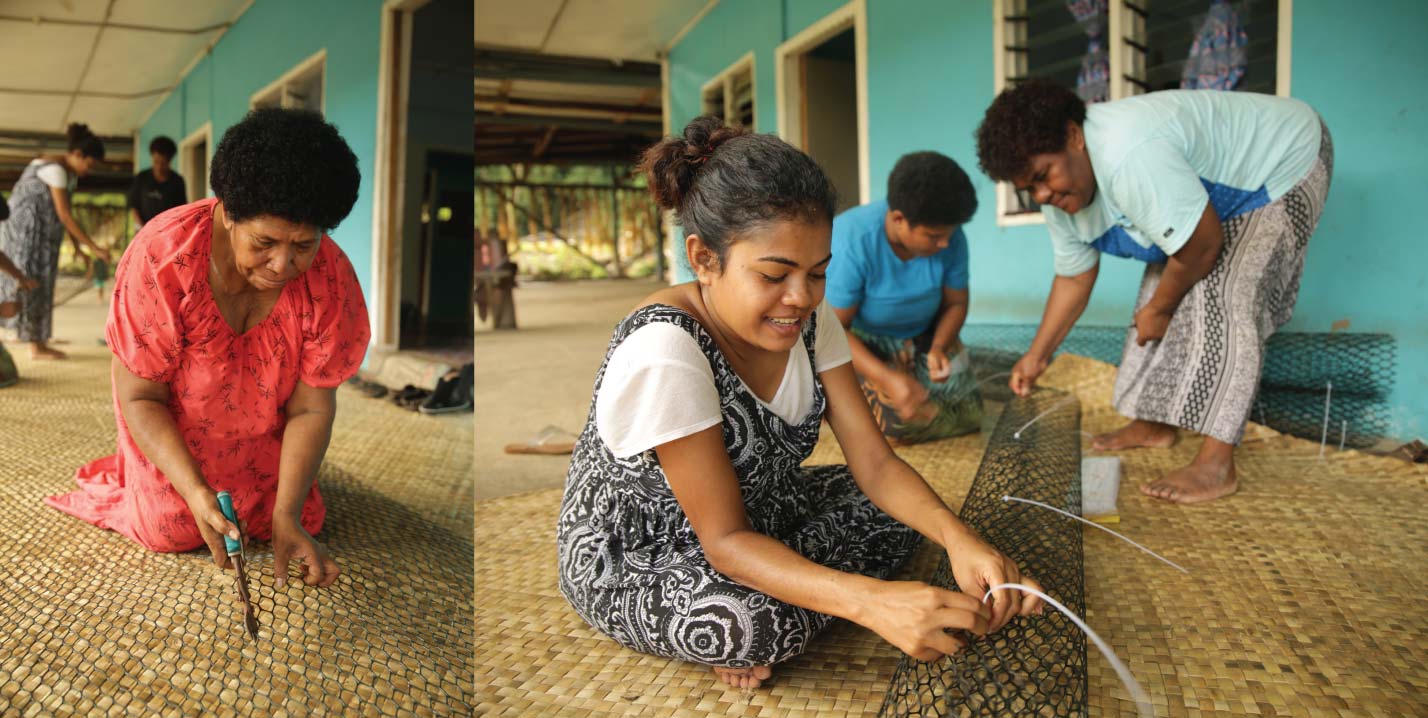
Women’s groups have taken the earliest steps, opening bank accounts and creating structures that ensure accountability and shared ownership. Their work ranges from weaving predator nets to cleaning juvenile oysters, while youth learn skills alongside them in caring for the lines. These first steps create pride and purpose and open the door to new livelihoods within the village.
Partnerships for communities
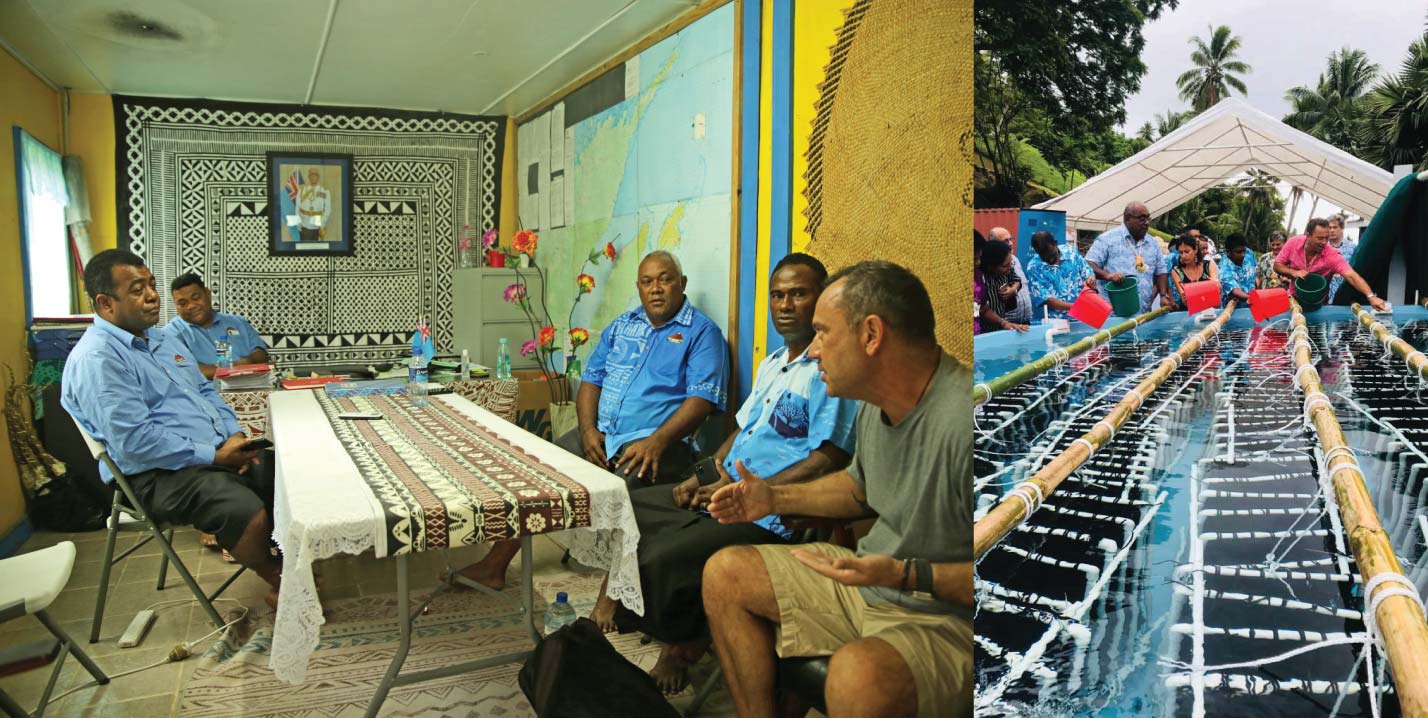
The Fiji Pearl Oyster project is strengthened by a wide network of collaboration. The Wildlife Conservation Society (WCS Fiji) supports resource management plans that protect biodiversity and coastal ecosystems. The Ministry of Fisheries ensures the work aligns with national priorities, while J. Hunter Marine provides technical mentorship, hatchery support, and training. Backing from the International Development Research Centre (IDRC) and Global Affairs Canada, alongside research partnerships with IISD and the Pacific Community (SPC), helps the project bridge traditional knowledge with global science. Together, these relationships form the backbone of a community-led model where risk, investment, and reward are shared in balance.







A shared vision of livelihood and conservation
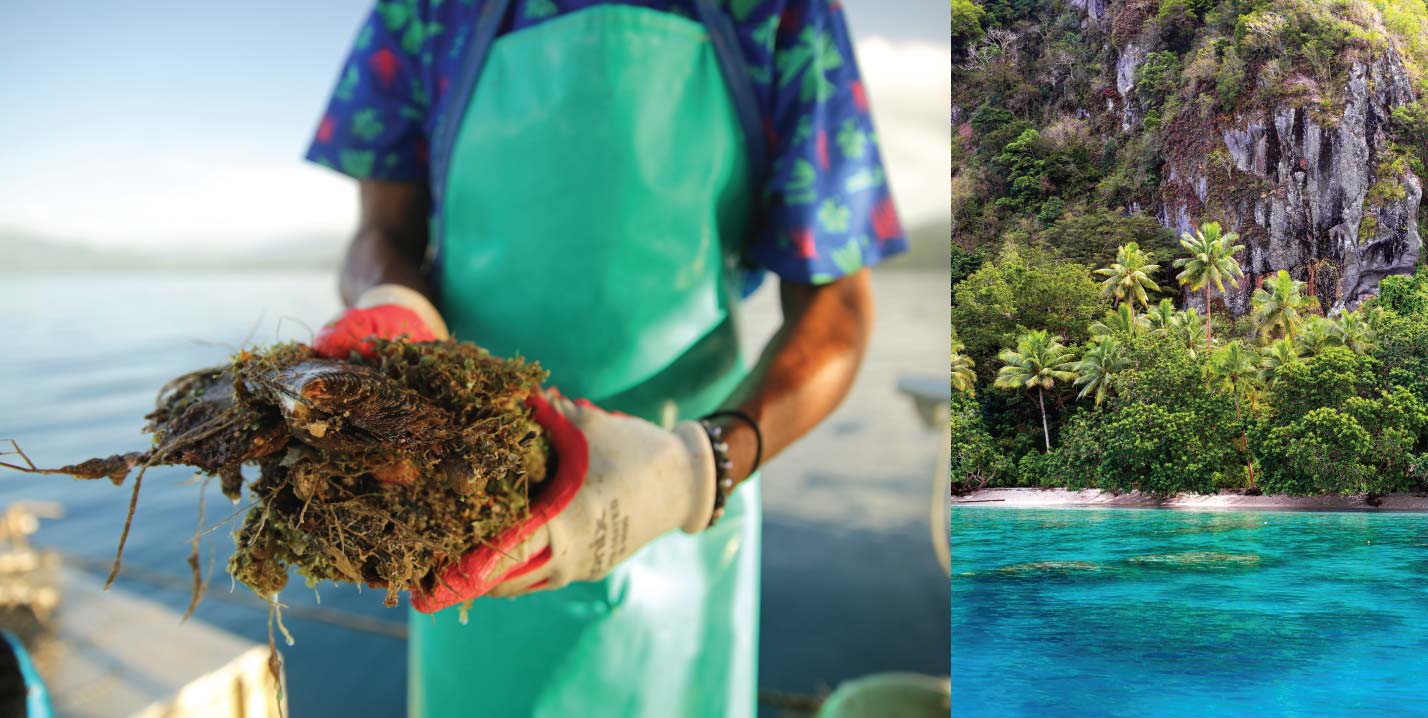
Clean water and healthy reefs are essential for oysters to thrive. Communities see this as a chance to link their prosperity to the care of mangroves, reefs, and coastlines. With partners walking alongside them, the project is planting the roots of a lasting blue economy where people and ecosystems grow stronger together.
Forefront of climate change
Coastal villages know the cost of climate change. Cyclones, warming seas, and declining fish stocks have tested their resilience. Oyster aquaculture offers a new path. It can bring food security, alternative income, and the ability to withstand future storms both economic and environmental. With time, patience, and support, these villages will one day see their care returned in harvests that sustain both people and the ocean they protect.

Cultural Continuity
Pearl oysters are part of Fiji’s marine story, long valued for the beauty of their shells and pearls. Now, through community-led aquaculture, this same species may soon support families as food. For iTaukei villages, this continuity is vital. The practices, values, and knowledge that surround the sea are not only a way of life but an inheritance. Oyster farming strengthens these ties by giving new purpose to ancient wisdom, ensuring that children grow up seeing their culture alive in the work of their parents and grandparents. The Fiji Pearl Oyster project is a living bridge that allows communities to preserve their identity, protect their heritage, and pass both the ocean and its stories on to future generations.