






Fiji Pearl Oyster
A first-of-its-kind native innovation
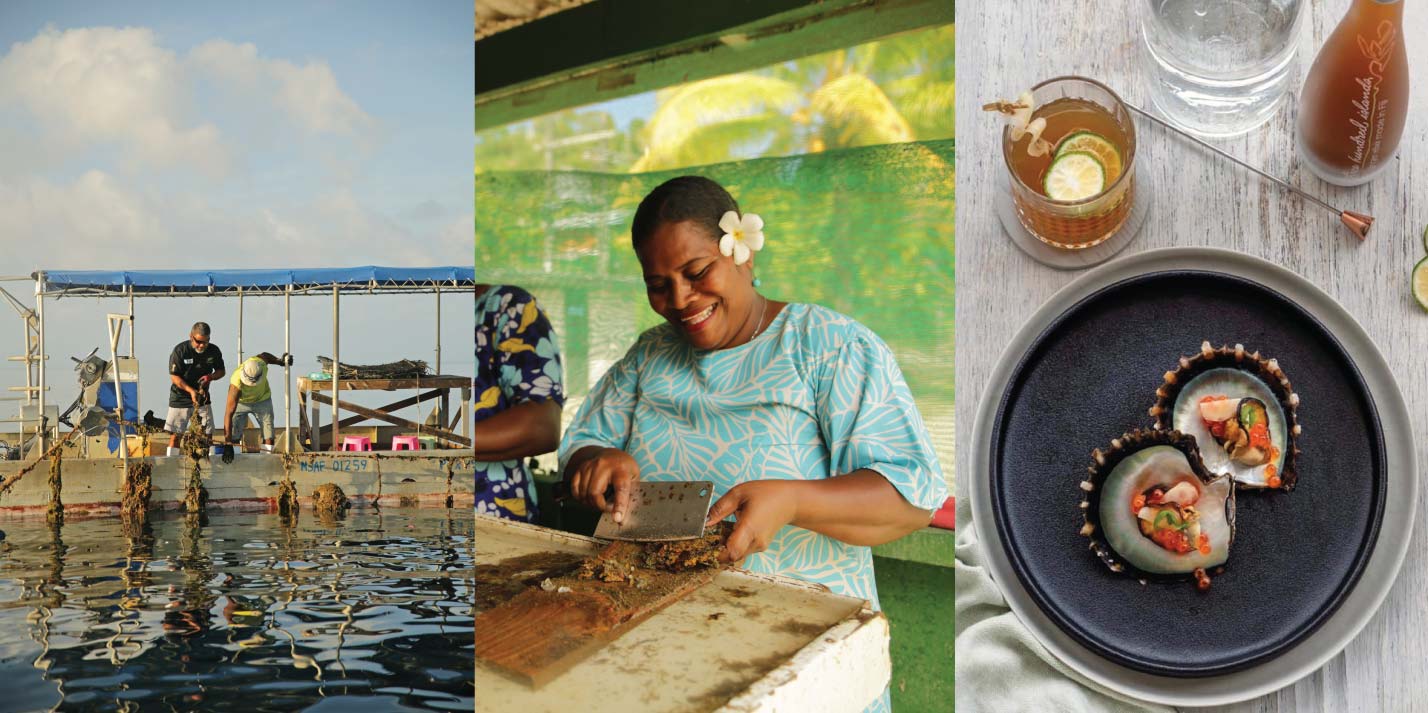
Born in the pristine waters of Savusavu, the Fiji Pearl Oyster is the first cultivated oyster using a native Fijian species. It is a breakthrough sparked by observation, refined by curiosity and hands-on persistence. Its distinct character, shape, and flavour are inseparable from the marine heritage of the islands. The Fiji Pearl Oyster, as a new delicacy, is a revolution in aquaculture development only made possible through community partnership and sustained by the stewardship of local villages who raise and manage the farms as part of a broader commitment to livelihoods and ocean conservation.
From reef to hand to table
The Fiji Pearl Oyster, shaped by volcanic bays, nurtured by village care, and guided by a deep respect for the ocean, is the first cultivated table oyster using Pinctada margaritifera, native to Fiji. First farmed by J. Hunter Pearls for gem-quality pearls, this native oyster has now found new life as a unique culinary delicacy. It is the result of 25 years of ocean work and trust built with the coastal communities of Savusavu. From thriving reefs to caring hands, it arrives, ready to be savoured.
On the menu at Namale
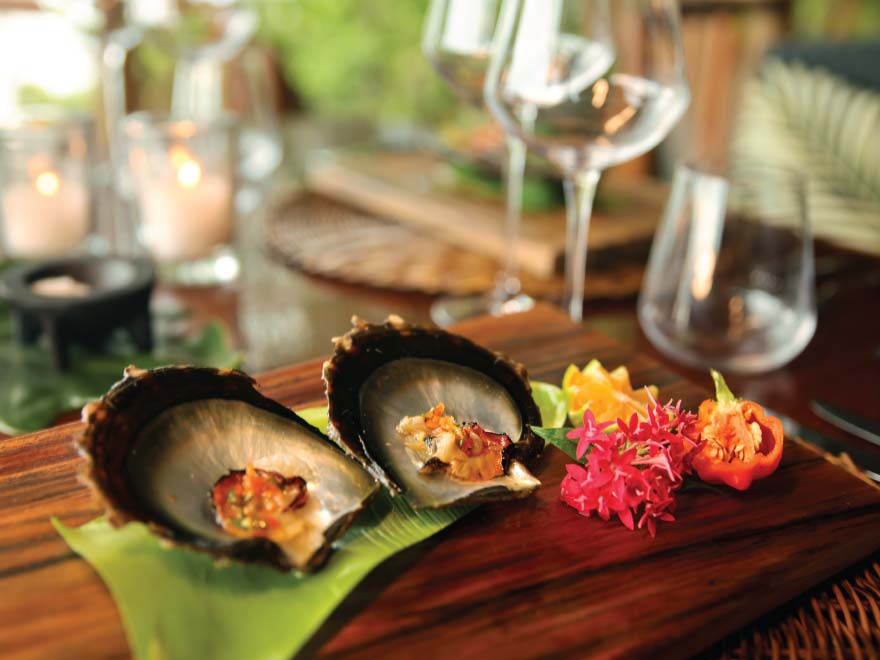
Sustainably sourced and locally revered, the Fiji Pearl Oyster now stars on the menu at the renowned five-star Namale Resort & Spa. Impressed by its briny, elegant whisper of the open sea, silky and vibrant on the palate while holding up to bold flavours, Chef Imlesh pairs it with a watermelon and chilli granita, garnished with Namale garden mint and flowers. A guest favourite and, for many, a once-in-a-lifetime experience, the dish celebrates local ingredients and a community-rooted eco-story near and dear to Namale’s heart.
Shucked by design
Once dismissed as too tough to open or not worth the effort, this native oyster was long overlooked, considered somewhere between a scallop and an oyster. Through persistence and refinement, Justin Hunter of J. Hunter Pearls developed a distinctive shucking method that preserves the oyster’s meat, form, and natural beauty, revealing a culinary profile that rewards the effort.
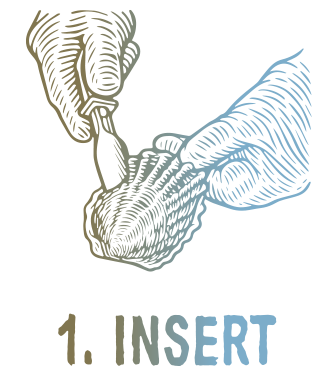
Begin at the hinge of the Fiji Pearl Oyster, where the byssus threads emerge. Gently insert the tip of a sturdy shucking tool into the crevice.
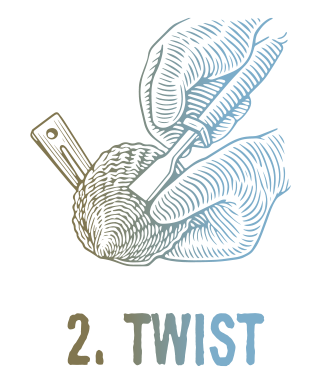
With a careful twisting motion, pry the shells apart just enough to disengage the hinge ligament and insert a wedge. This technique separates the valves without piercing or bruising the soft body within.
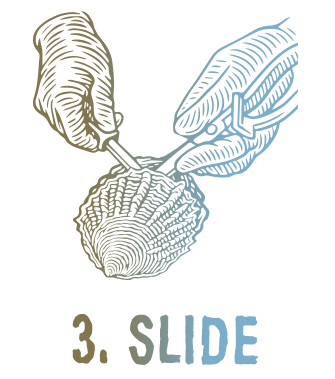
Next, slide the blade along the inner surface of the upper (flat) shell, gliding it just beneath the top valve to sever the superior adductor muscle, the primary structure anchoring the oyster to the shell.

Once the top shell is lifted away, the byssus bundle can be trimmed or gently pulled free. To release the oyster from the lower (cupped) shell, delicately run the blade beneath the body to cleanly detach the inferior adductor muscle.